


Most of these paraneoplastic phenomena are uncommon. Look for a commoner
explanation for the skin changes.
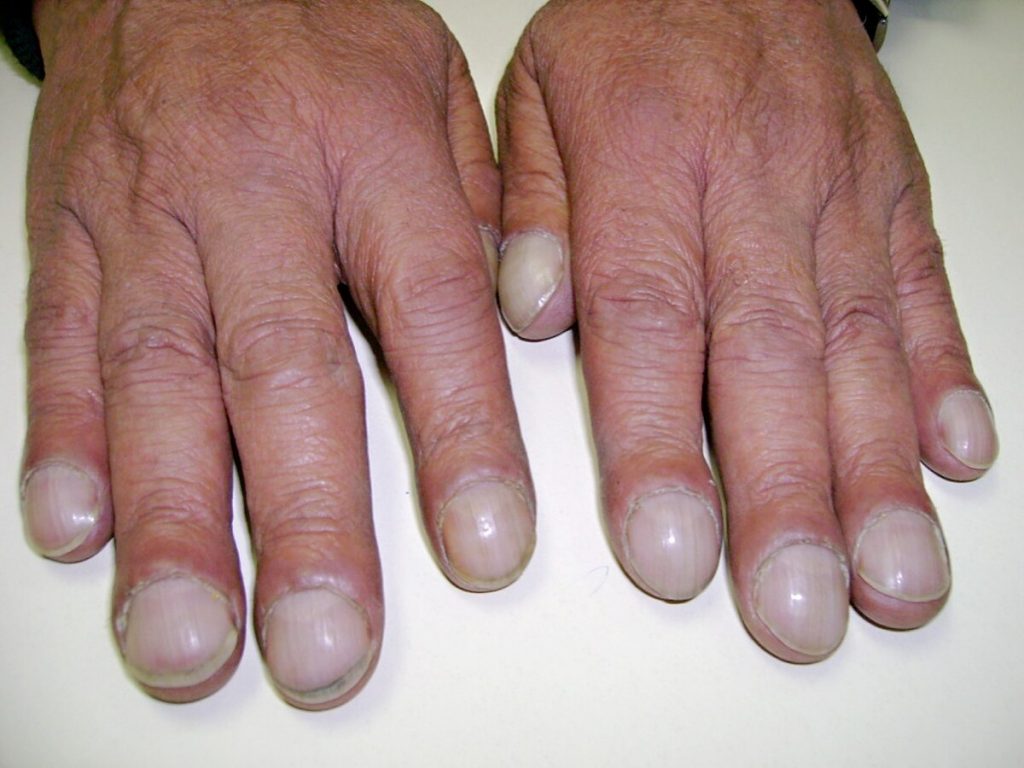
• Nail clubbing with hypertrophic osteoarthropathy (phalanges) – lung cancer.
• Ichthyosis (dry scaly skin) – lymphoma/lymphoproliferative disease.
• Dermatomyositis – 10–30% of adult patients have an associated malignancy.
• SCLE may be triggered by an underlying malignancy (rare).
• Neutrophilic dermatoses (Sweet syndrome, PG) (commonest association AML).
• Acanthosis nigricans: more often seen in insulin resistance and obesity than in
malignancy (generally adenocarcinoma of the stomach). Flexural skin is hyperpigmented
and thickened with a velvety texture. Skin tags are common. May be associated with a
wrinkled ridged appearance on the palms (tripe palms).
• Diffuse pigmentation may be caused by an ACTH-secreting tumour (ectopic ACTH).
Malignancies include SCC of the lung, carcinoid tumours, and pancreatic islet cell
tumours.
• Carcinoid syndrome (rare)—episodic flushing eventually leads to persistent facial
oedema and telangiectasia.
• Necrolytic migratory erythema (rare)—seen in association with glucagonoma (α-cell
tumours of the pancreas).
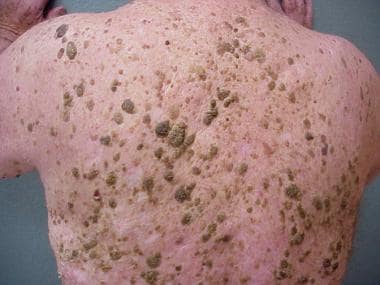
• Eruptive seborrhoeic warts (sign of Leser–Trelat)—sudden appearance of large
numbers of seborrhoeic warts is seen rarely in association with GI tract cancers,
genitourinary cancers, and lymphoproliferative disease. Seborrhoeic warts are very
common in the elderly and, in most patients, are of no significance. Eruptive seborrhoeic
warts may also be triggered by widespread inflammatory skin diseases such as eczema.
• Bazex syndrome (acrokeratosis paraneoplastica). Psoriasiform rash on the ears, nose,
cheeks, hands (palmar hyperkeratosis), feet, and knees, with nail dystrophy. Rare and
associated with carcinomas of the larynx, pharynx, trachea, bronchus, or upper
oesophagus.
• Acquired hypertrichosis lanuginosa. Long silky non-pigmented hair (lanugo hair) on the
face and trunk. Most often associated with adenocarcinoma of the GI tract (rare).
Consider other causes of hypertrichosis (increased hair growth on any part of the body,
independent of androgens), including drugs and PCT.
• Paraneoplastic pemphigus (rare). Associated with B-cell lymphoma, thymoma, and
Castleman disease.
• Erythema gyratum repens. Urticated wavy erythematous bands like the grain of wood
that advance outward by about 1cm a day. Most often associated with lung carcinoma
(rare).