

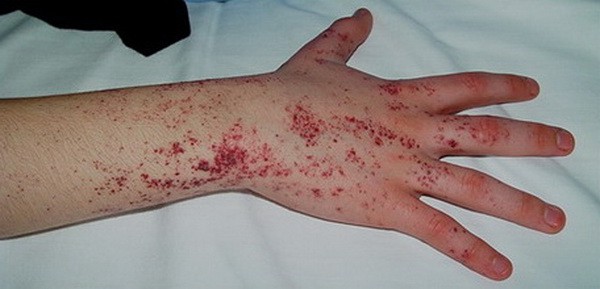
Synonyms: Anderson–Fabry disease; angiokeratoma corporis diffusum.
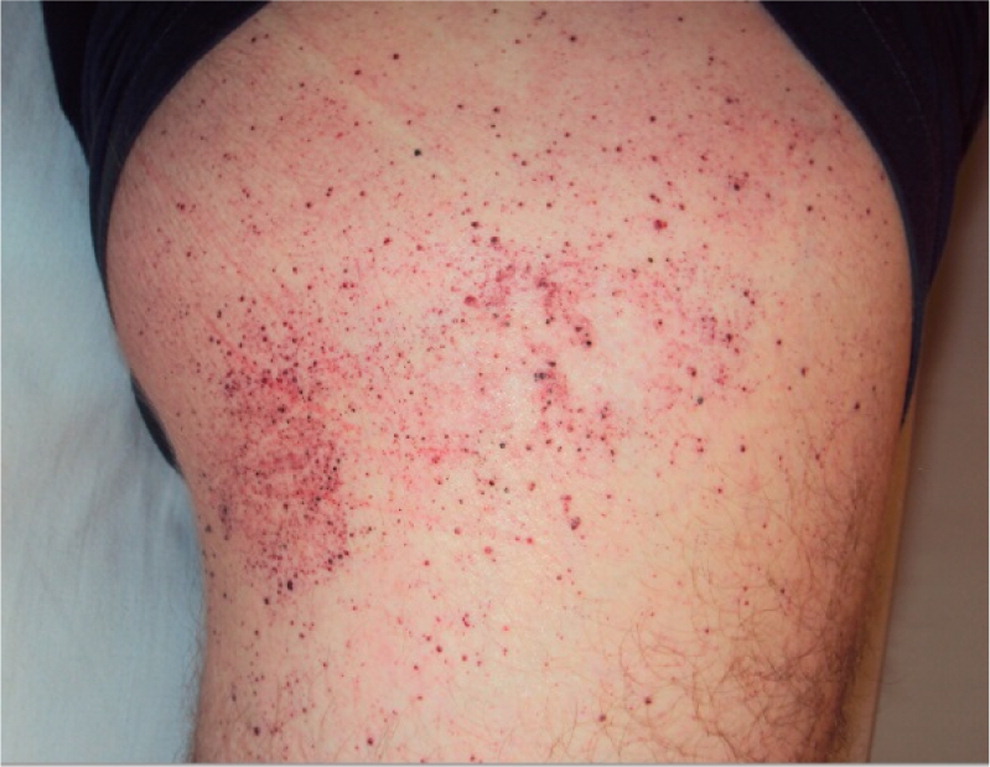
Cutaneous signs may be an early manifestation of this rare X-linked lysosomal storage
disease caused by a deficiency in α-galactosidase A. globotriaosylceramide accumulates
in endothelial cells, vascular smooth muscle, cutaneous fibroblasts and erector pilori
muscles, myocardium, corneal epithelial cells, and organs such as the kidneys, heart,
lungs, bowel, and eyes.
Complications include renal disease, angina, myocardial infarction, transient ischaemic
attacks, and stroke. Severe neuropathic pain causes depression or even suicide. Before the
introduction of enzyme replacement therapy, male with Fabry disease died around age
40–50 years, and life expectancy was shortened in heterozygous female. Patients who
have cutaneous angiokeratomas and telangiectasias are more likely to have major organ
involvement. Prevalence may be higher than previously realized, e.g. 2–5% patients with
cryptogenic stroke may have milder forms. Enzyme replacement therapy may improve
quality of life by relieving symptoms, such as pain, and slowing the progression of
disease, but it is not curative.
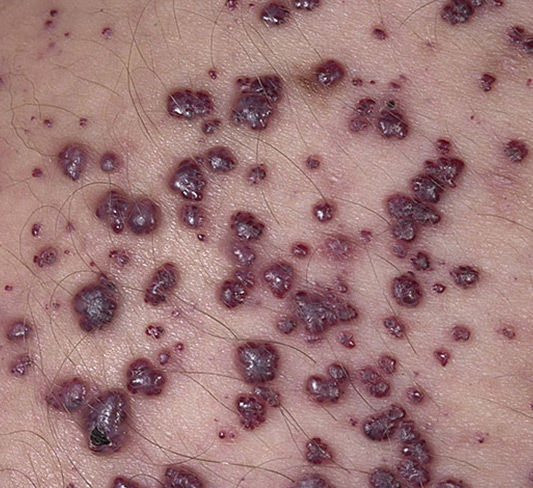
Other information :
• Patients complain of excruciating neuropathic pain (lancinating, burning) in extremities
(onset in childhood, associated with small- fibre neuropathy). exercise, heat, and alcohol
make the pain worse.
• Asymptomatic telangiectasias and dark red papules (angiokeratomas) may appear in
childhood and become more numerous with age.
• Reduced sweating (50% of male, 28% of female) or anhidrosis (25% of male, 4% of
female) causes heat intolerance. Patients may collapse after exercise. Rarely, patients
report hyperhidrosis.
• Other problems include hearing loss, visual loss, nausea, abdominal pain, and episodic
diarrhoea/constipation, but presentation is variable.
Other symptoms :
• Facial features: male have prominent supraorbital ridges, frontal bossing, and
thickening of the lips.
• Angiokeratomas (slightly keratotic vascular papules, like Campbell de Morgan spots)
on the thighs, hips, buttocks, genitalia, and lower back and abdomen, i.e. between the
knees and the umbilicus in a ‘bathing trunk’ distribution (66% of male, 36% of female).
• Telangiectases, vascular macules and/or papules distributed sparsely in other areas, e.g.
palms and soles, fingers and toes, nail folds, vermillion border of the lips, and labial
mucosa.
• Reversible oedema/lymphoedema of lower extremities (16–25% of male, 6–17% of
female).