

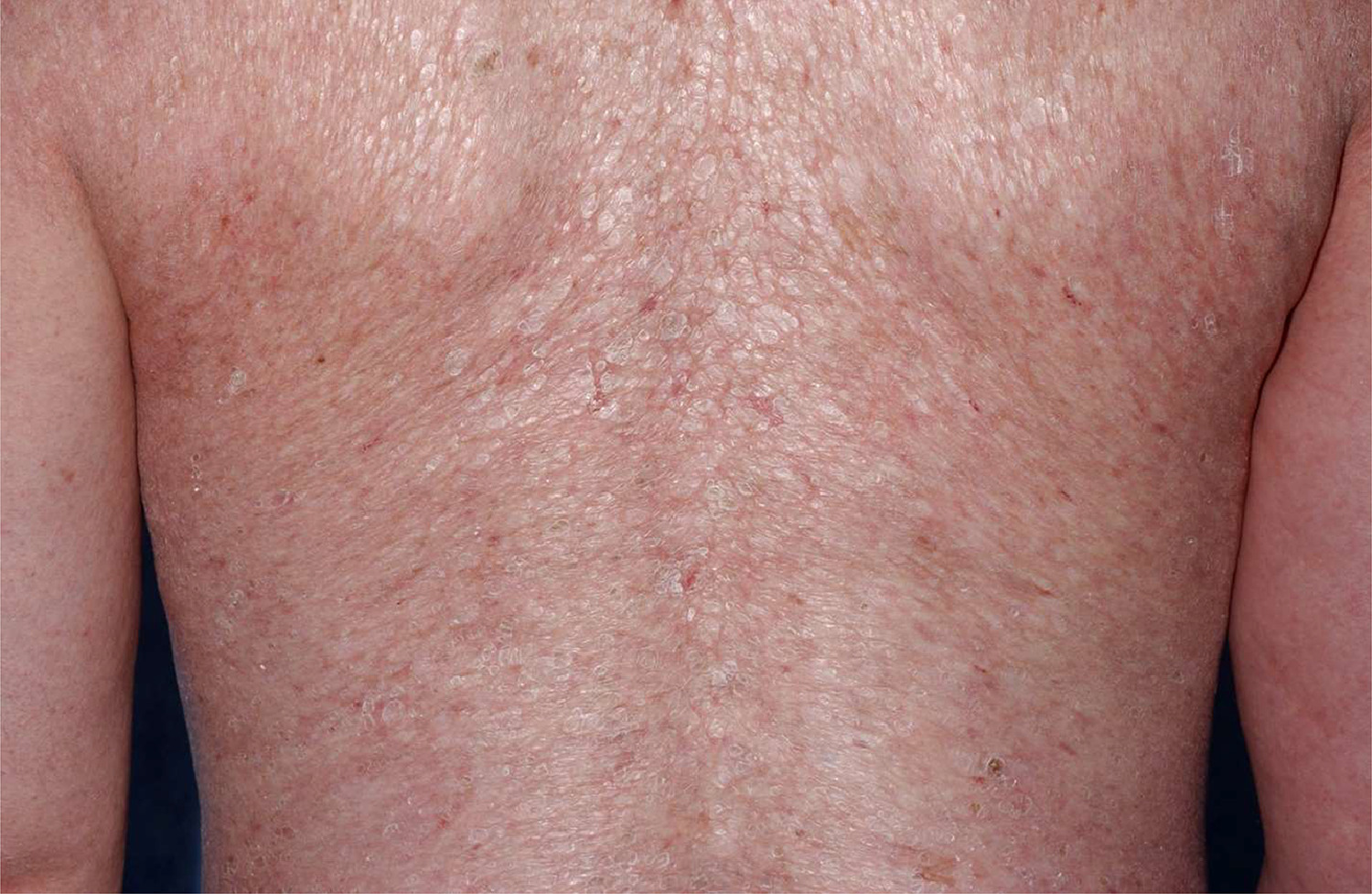
Chronic GVHD has an insidious onset. It is multisystem, but the skin, mouth, and eyes
are major targets. Donor-derived, alloreactive CD4-negative and CD8-positive T-cells are
thought to play a part in the pathogenesis. Some aspects of chronic GVHD share features
with other autoimmune diseases such as primary biliary cirrhosis, bronchiolitis obliterans,
and Sjögren syndrome.
Patients should be cared for by a multidisciplinary team that includes ophthalmologists,
dermatologists, and haematologists. Fifty percent have limited cutaneous disease and a
good prognosis, but the outcome in widespread chronic cutaneous GVHD is poor.
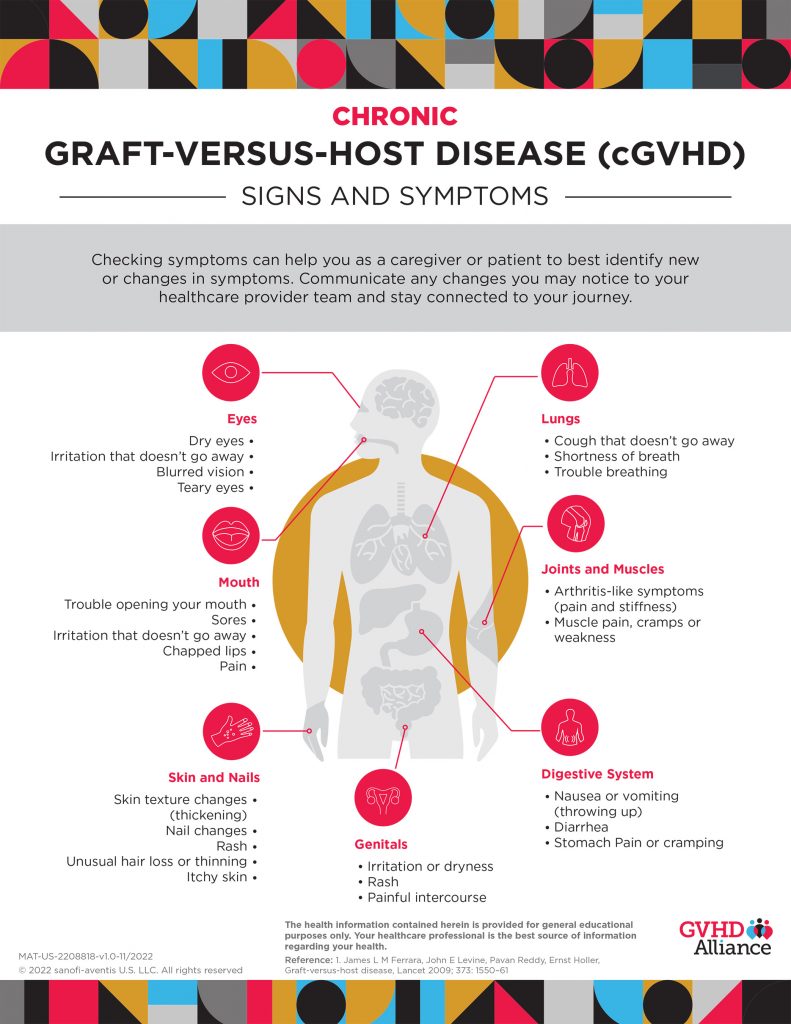
Symptoms :
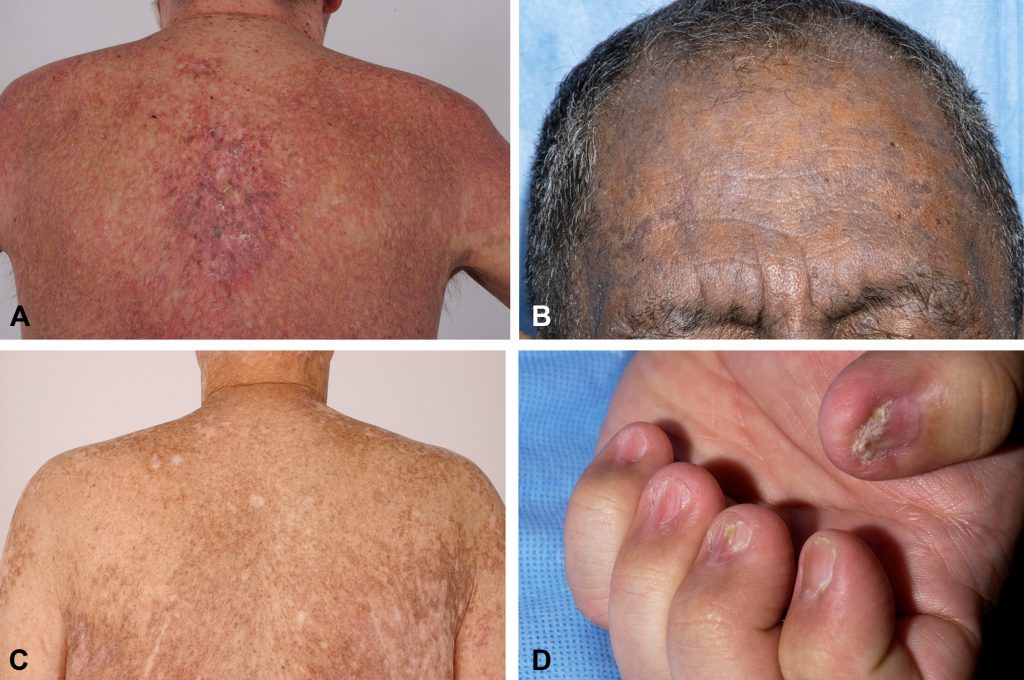
• Manifestations vary, and patients often have overlapping patterns of disease with a
combination of lichenoid and sclerodermoid features.
• Check hair and nails, as well as skin.
• Examine mucosae, including genitalia.
• Assess joint mobility and impact of disease.
• These patients have been exposed to chemotherapy and prolonged immunosuppression
and are at risk of cutaneous malignancies and/or unusual cutaneous infections (fungal,
atypical mycobacterial).
• Other organ involvement includes:
o GIT causing abdominal symptoms (diarrhoea) and weight loss.
o Liver with abnormal LFTs.
o Lungs causing shortness of breath (check lung function tests).
What should I do?
• Biopsy atypical cutaneous lesions to exclude malignancy/infection.
• Emollients and soap substitutes with antiseptics may reduce itch, improve the skin
barrier, and reduce the risk of infection.
• Artificialsaliva,topicallocalanaestheticgels,andtopicalcorticosteroids are indicated for
painful oral disease.
• Prescribe artificial tears for dry eyes.
• Lichenoid disease: potent corticosteroid ointments or 0.1% tacrolimus ointment twice a
day may reduce inflammation.
• Sclerodermoid disease: UVB, PUVA, or UVA1 may be helpful in early disease.
Extracorporeal photopheresis may have a role in widespread disease. ECP may induce
antigen-specific regulatory T-cells that suppress GVHD, but the mechanisms of action
are not clear.
• The combination of systemic corticosteroids and immunosuppressive agents is
generally used as first-line treatment. Complications, such as infection, increase
mortality.
• Other treatments include mTOR inhibitors, rituximab, and imatinib. More trials are
needed.