

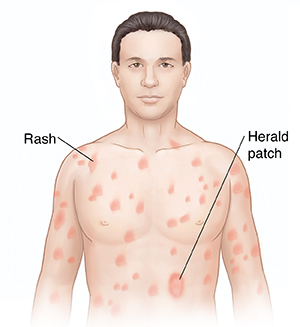
Pityriasis rosea can affect any age group. It most commonly occurs between the ages of 10 and 35. It usually goes away on its own within 10 weeks.
Causes
Though the exact causes are still unknown, doctors think it’s related to a viral infection, particularly some forms of herpes. It’s not contagious and, in most people, does not leave marks or scars after it heals.
Symptoms
Pityriasis rosea typically begins with a large, slightly raised, scaly patch — called the herald patch — on your back, chest or abdomen. Before the herald patch appears, some people experience headache, fatigue, fever or sore throat.
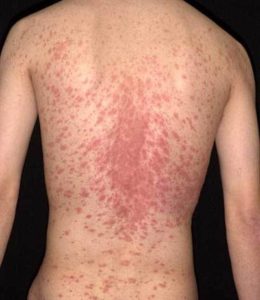
A few days to a few weeks after the herald patch appears, you may notice smaller scaly spots across your back, chest or abdomen that resemble a pine-tree pattern. The rash can cause itching, which is occasionally severe.
When to see a doctor
See your doctor if you develop a persistent rash. Or when you need to distinguish it from other skin diseases, including eczema, ringworm, psoriasis or syphilis, etc.