

What is porphyria?
The porphyrias are a group of disorders caused by genetic or acquired partial deficiencies
in one of the enzymes in the metabolic pathway for haem. Haem precursors accumulate
in urine, faeces, plasma, and/or erythrocytes. Disease may be acute neurovisceral, non-
acute cutaneous, or mixed.
Acute neurovisceral attacks are associated with a rise in 5- aminolevulinate and
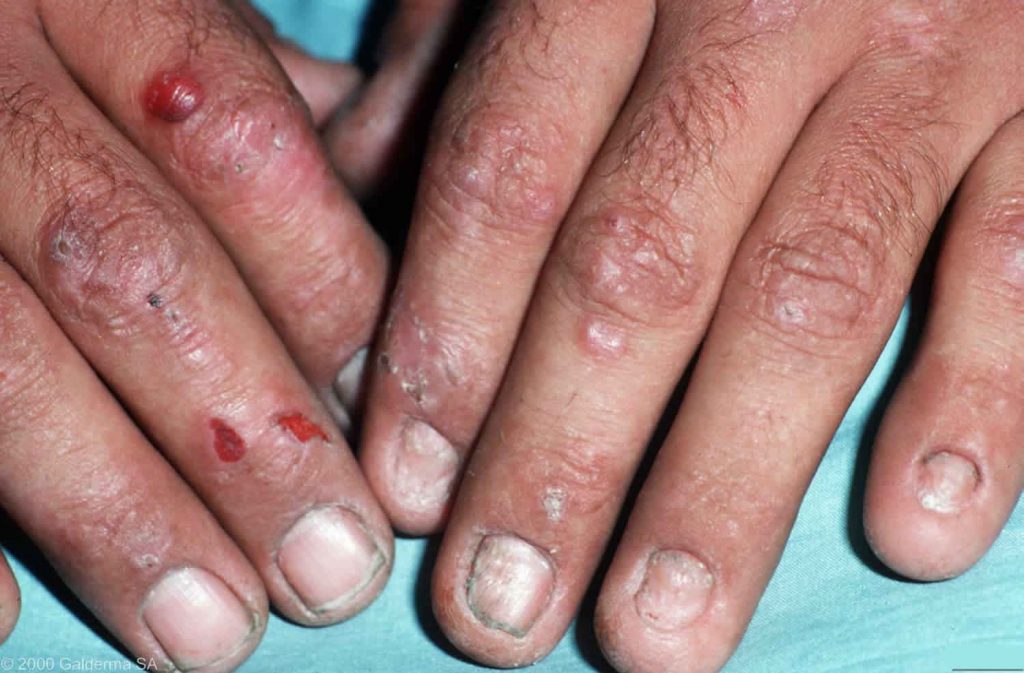
porphobilinogen. Blisters/skin fragility caused by accumulation of water-soluble
porphyrins (uroporphyrin and coproporphyrin) in PCT, variegate porphyria, and
hereditary coproporphyria. Painful photosensitivity is caused by raised protoporphyrin in
EPP.
Although mutations reduce the activity of the enzymes by 50%, most (80%) of those who
inherit an AD porphyria remain asymptomatic. Other factors that increase the demand for
haem and/or decrease enzyme activity are required for the diseases to be expressed.
Acute porphyria: what should I look for?
• Episodic neurovisceral attacks that start between age 15 and 35.
• Commoner in female (less likely after menopause).
• Severe pain (usually abdominal), nausea, vomiting, constipation.
• Hypertension, tachycardia, low sodium.
• Neurological/psychiatric signs: psychological upset, convulsions, muscle weakness.
• Trigger: e.g. drugs (oestrogens, progesterones, barbiturates, sulfonamides, tetracyclines,
etc.), alcohol, infection, calorie restriction.
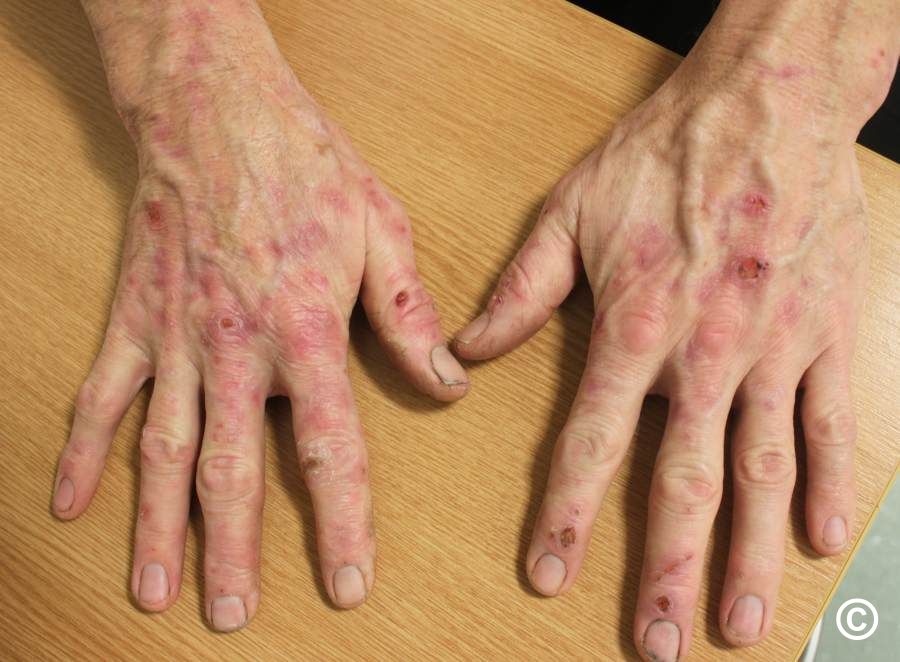
• Cutaneous involvement (none in acute intermittent porphyria but may be seen in some
acute porphyrias, e.g. variegate porphyria). Skin fragility, blisters, milia, erosions, and/or
scars on exposed sites such as dorsum of hands or face.
Acute porphyria: what should I do?
• Remove precipitants, e.g. drugs, including recreational drugs.
• Treat symptoms—fluids (monitor sodium), analgesia, antiemetics.
• Collect a random fresh sample of urine during the attack to measure porphyrins. Protect
the fresh specimen from light. Analyse faecal and plasma porphyrins to determine the
type of acute porphyria. Urinary, faecal, and plasma porphyrin concentrations may return
to normal during remission in all the AD acute porphyrias.
• Consider early administration of IV haem arginate to suppress the production of haem
precursors.
• Screen family members.