

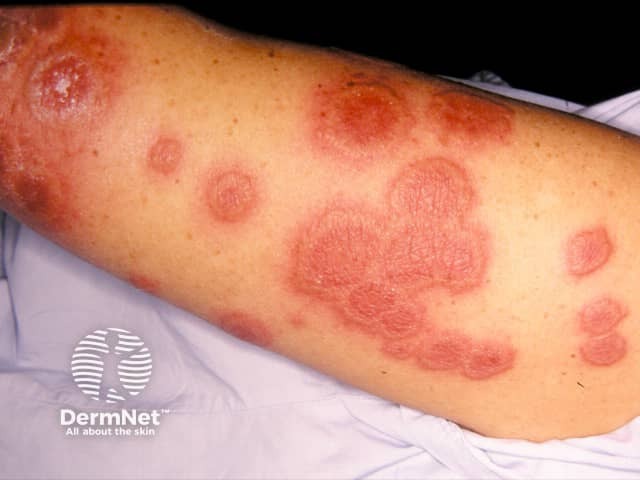
The neutrophilic dermatoses associated with bowel disease include Pyoderma
gangrenosum, Sweet syndrome, neutrophilic dermatosis of the dorsal hands, and bowel-
associated dermatosis–arthritis syndrome.
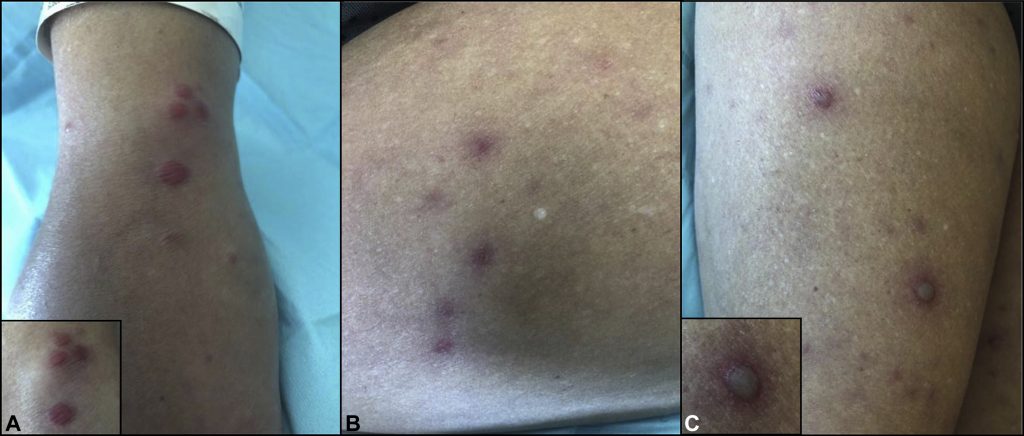
Sweet syndrome (acute febrile neutrophilic dermatosis)
This syndrome is characterized by intense neutrophilic infiltration of the skin. It is
commoner in women.
Associations :
• Infection: 70% of patients. Most often 1–3 weeks after infection of upper respiratory
tract.
• Chronic inflammation: 15% of patients, e.g. inflammatory bowel disease, connective
tissue diseases such as polychondritis, sarcoidosis.
• Malignancy: 10–20% of patients—particularly haematological malignancies, e.g. acute
myelogenous leukaemia, myeloproliferative disease or myelodysplastic syndromes,
lymphoma, and paraproteinaemias.
• Drugs, e.g. azathioprine, oral contraceptive, minocycline, diazepam, Granulocyte –
Colony stimulating factor , and bortezomib (a proteasome inhibitor).
• Immunodeficiency: primary or secondary.
• Pregnancy.
Symptom :
• Fever and neutrophilia with a raised ESR (erythrocyte sedimentation rate), often
suggesting sepsis.
• Tender,well-demarcated, oedematous, erythematous papules and large plaques, most
often on the face and upper trunk (differentiate from cellulitis or herpes infection,
particularly if solitary lesion).
• Surface may appear to be vesicular (pseudo-vesicles), reflecting the intense dermal
oedema, but it is rare to find discrete vesicles or bullae that can be ruptured.
Occasionally, plaques become pustular.
• Panniculitis: nodules rupture, releasing necrotic fat (uncommon).
• Iritis, episcleritis, and/or conjunctivitis.
• Arthralgia, polyarthritis, and myalgia.
• Oral mucosal ulcers (mimic aphthae) (uncommon).
• Patients may also have Pyoderma gangrenosum.
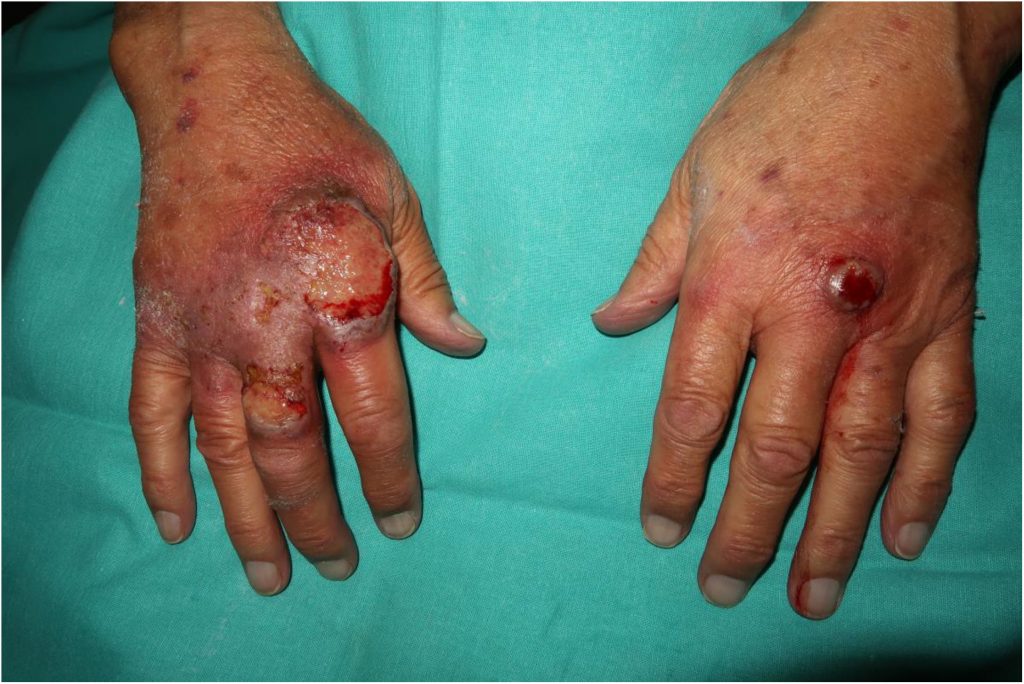
Neutrophilic dermatosis of the dorsal hands
• Rare.
• Painful, erythematous papules, plaques, and haemorrhagic bullae limited to the dorsum
of the hands.
• Like Sweet syndrome, may be associated with low-grade fever and arthralgia.
• Disease associations similar to Sweet syndrome.
Bowel-associated dermatosis–arthritis syndrome
The overgrowth of bacteria in a blind loop with the deposition of immune complexes is
thought to trigger disease. The histopathological changes resemble those of Sweet
syndrome.
Associations :
• Bowel bypass surgery to treat morbid obesity.
• Extensive resection of the small bowel.
• Patients with an abnormal segment of bowel in diseases such as diverticulosis or
inflammatory bowel disease.
Symptoms :
• A history of gastrointestinal disease or gastrointestinal surgery.
• Crops of erythematous macules, purpuric papules, and small vesico pustules on the
upper trunk and extremities.
• Migratory polyarthralgia or a non-erosive polyarthritis.
• Malaise and fever.