

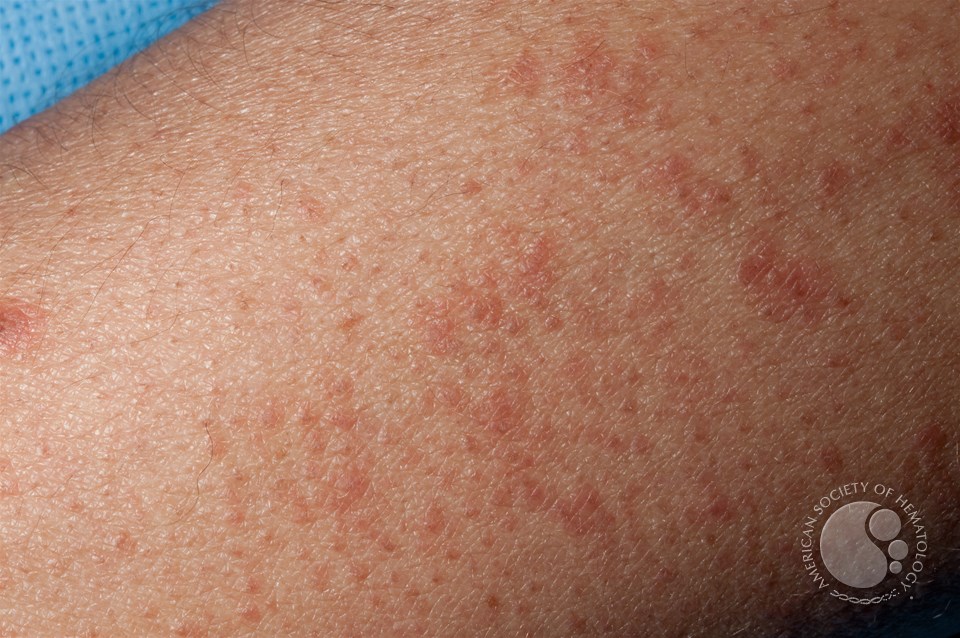
What is graft-versus-host disease (GVHD)?
Haemopoietic stem cell transplants (HSCTs) are used to treat conditions such as
leukaemia, myeloma, lymphoma, aplastic anaemia, and immunodeficiency. GVHD
complicates >50% of allogeneic HSCTs and is caused by donor immunocompetent T-
cells reacting against immunocompromised host tissues. New, less aggressive approaches
(reduced-intensity conditioning and umbilical cord blood transplantation) have expanded
the indications for HSCTs, and the prevalence of GVHD is rising. Donor lymphocyte
infusions (DLIs) are used to induce remission in patients who relapse after allogeneic
HSCT but also incur a risk of acute GVHD. Some GVHD may be desired for the graft-
versus-malignancy effect, but chronic GVHD is a major cause of morbidity and
mortality.
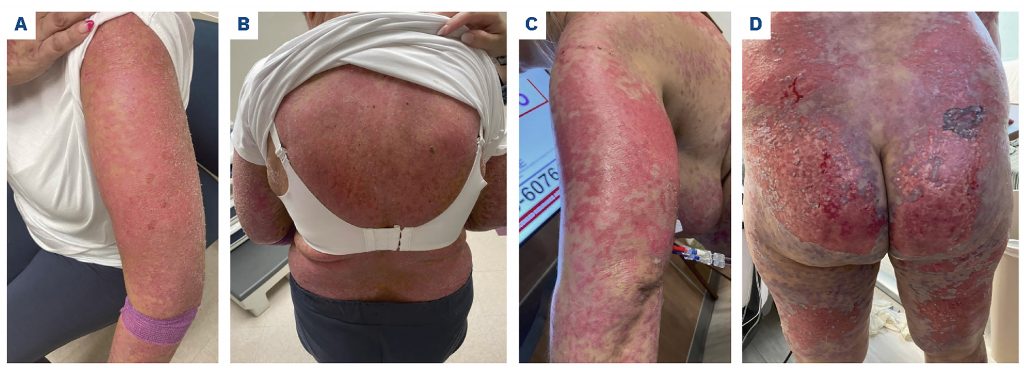
The boundary between acute and chronic GVHD is blurred, and diagnosis depends on
clinical features, and not on timing post-transplant. Although the prevalence of acute
GVHD is directly related to the degree of mismatch between HLA proteins in the donor
and recipient, acute GVHD has been reported after autologous HSCT, because regulatory
T-cells are depleted, allowing the autologous graft to recognize self-antigens.
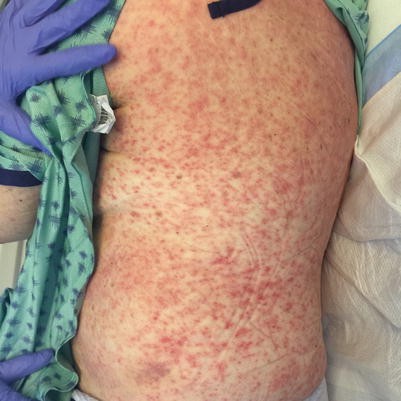
Symptoms :
• Sudden onset of burning or pruritic morbilliform rash—often perifollicular initially.
• Macular blotchy erythema, initially affecting the palms and soles, and face.
• Commonly involves the pinnae, cheeks, lateral neck, and upper back. The scalp is
usually spared. The patient may become erythrodermic.
• Mucosal involvement is frequent, especially conjunctival and oral.
• Generalized erythema, blistering, and erosions simulate TEN in severe acute GVHD.
• Other features:
o Fever (culture-negative).
o Abdominal pain, nausea, vomiting, and watery/bloody diarrhoea.
o Abnormal liver function—raised bilirubin and alkaline phosphatase.
Risk factors for GVHD :
• Older age.
• History of acute GVHD increases the risk of chronic GVHD.
• HLA mismatch.
• Intense preparative regimen.
• Haemopoietic cells from peripheral blood, not bone marrow (more T-cells).
• Less aggressive immunosuppression after transplantation.
• Donor T-lymphocyte infusions (given to incite a graft-versus- malignancy effect).