

Carcinoid tumours are found most often in the gastro intestinal tract (55%) and
bronchopulmonary system (30%). Carcinoids arise from enterochromaffin cells of the
gastro intestinal tract, and the tumours release a variety of polypeptides, pyogenic
amines, and prostaglandins, which are responsible for the carcinoid syndrome. Tumours
are rare, and the syndrome even rarer, occurring in <10% of patients with a tumour.
Symptoms :
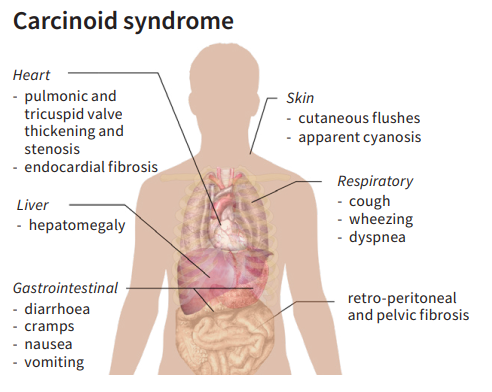
Features of carcinoid syndrome comprise:
• Episodic dry cutaneous flushing (85% of patients) lasting 20–30s.
• Flushes may last from hours to days in bronchial carcinoid.
• Flushes may be spontaneous or triggered by eating, alcohol, defecation, changes in
temperature, emotional stress, or palpation of the liver.
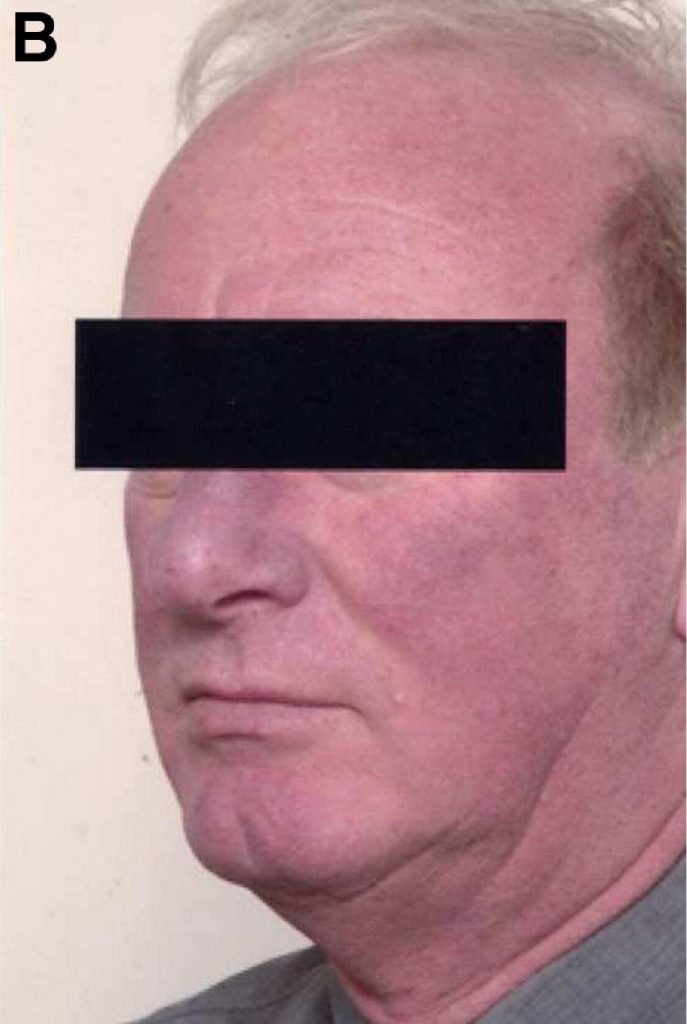
• Flushing starts suddenly on the face, neck, and upper chest.
• A mild burning sensation is common, or the skin may be intensely itchy.
• Severe dry flushes may be accompanied by hypotension and tachycardia.
• Diarrhoea may be explosive and disabling.
• Wheezing and dyspnoea are common, particularly during episodes of flushing.
• Chronic disease leads to persistent brawny facial oedema and facial venous
telangiectasia that may simulate rosacea, but patients do not have pustules or papules.
• Scleroderma-like fibrosis probably caused by impaired tryptophan metabolism.
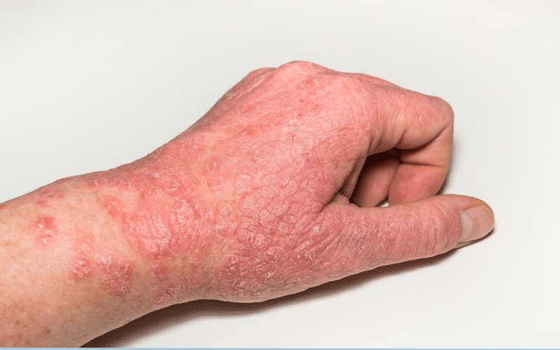
• Pellagra (dietary tryptophan is diverted for synthesis of serotonin) rough scaly skin,
glossitis, angular stomatitis, and confusion.
• Signs of tricuspid regurgitation.
What should I do?
• Exclude common causes of a red face.
• If clinically indicated, measure 24-h urinary excretion of 5- hydroxyindoleacetic acid
(HIAA) which is increased in carcinoid syndrome.
• Localize the tumour, e.g. abdominal CT.