

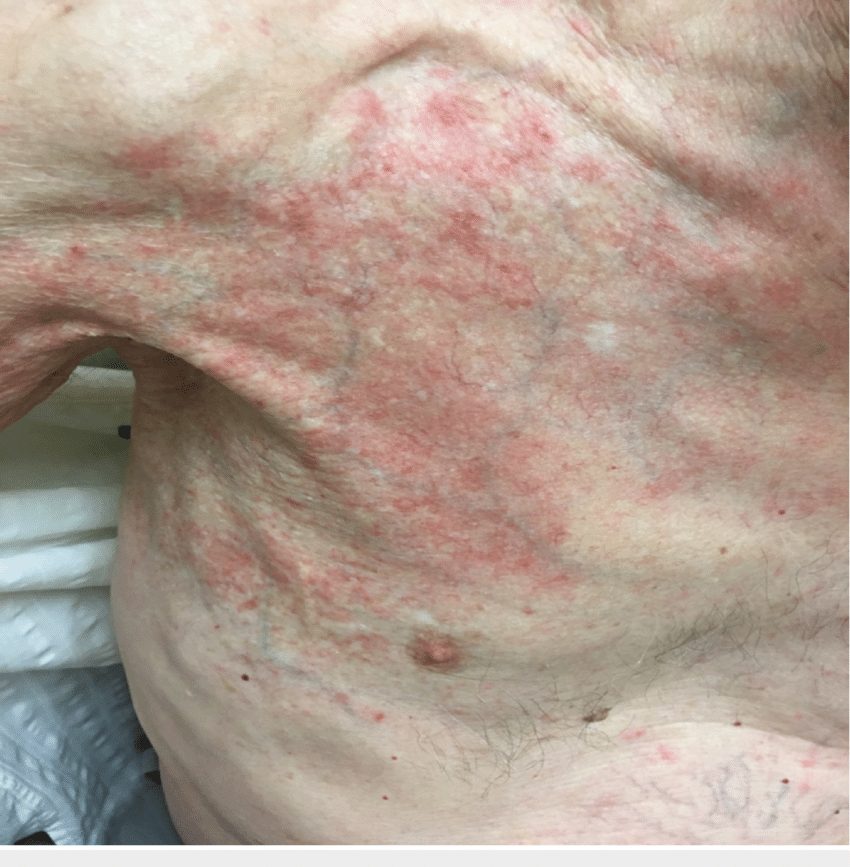
Early reactions in radiation field:
Acute side effects resolve within 4–6 weeks, usually without treatment, but moisturizers
and soap substitutes may be helpful.
Reactions include:
• Erythematous, dry skin and mild oedema (like sunburn).
• Oedema, marked erythema, and moist desquamation.
• Blisters, ulcers, and haemorrhagic crusting (infrequent because doses of radiotherapy
are more precisely controlled than in the past).
• Hyperpigmentation (commoner in darker skin).
• Hair loss.
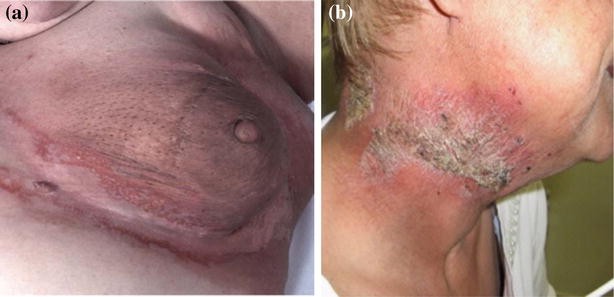
Late reactions in radiation field:
Late reactions in the radiation field may appear years after radiotherapy, and changes
gradually progress. Reactions include:
• Telangiectasia, hypo and hyperpigmentation.
• Epidermal atrophy and fragility.
• Necrosis leading to ulceration (may simulate malignancy).
• Dermal and subcutaneous fibrosis (within first 3 months).
Generalized skin diseases induced by radiation:
• Herpes zoster.
• Erythema multiform.
• Autoimmune blistering diseases (bullous pemphigoid, pemphigus).
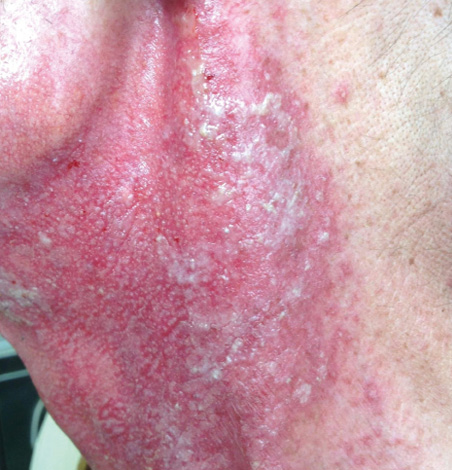
Skin diseases induced by radiation but localized to the radiation field:
• Post-radiotherapy skin changes are more painful when affecting the breast, compared to
other sites.
• Acneiform lesions with comedones.
• Lichenoid reactions, e.g. Erythema multiform, graft versus host disease, lichen planus.
• Bullous pemphigoid.
• Fibrosing reactions:
o Morphoea: abrupt onset with erythema and induration 1 month to 3 years after
radiotherapy. Usually affects the breast. Treatment is not very effective, but
topical, intralesional, and oral corticosteroids have been recommended.
o Lichen sclerosus.
o Post-irradiation pseudosclerodermatous panniculitis 1–8 months after
megavoltage (deeply penetrating) radiotherapy. Usually affects the breast. May
resemble metastatic disease. Can improve spontaneously.
• Vasculopathy with fibrosis, atherosclerosis, and rupture of vessels.
• Malignancy, e.g. BCCs, SCCs.
• Radiation recall dermatitis.
• Radiation-associated vascular lesions—morphological range from atypical vascular
lesions to cutaneous angiosarcoma—usually following breast carcinoma.