

Mucocutaneous signs will depend on the cause of cirrhosis.
• Colour change:
o Dry yellow skin and yellow sclerae.
o Hyperpigmentation of exposed skin.
o Generalized hyperpigmentation, with sparing of the interscapular and scapular
skin, has been described in primary biliary cirrhosis.
o Generalized slate-grey pigmentation (melanin) or bronzed pigmentation of the
legs (iron and melanin deposition)—‘bronze diabetes’—in haemochromatosis.
o Greyish skin and bluish lunulae in Wilson disease (also Kayser– Fleischer
rings—copper in the limbus of the cornea).
• Excoriations. Itch may be very distressing, particularly in primary biliary cirrhosis.
Precise cause unknown. Presumably relates to the impaired biliary excretion of an
irritating substance or substances. Bile acids injected into the skin cause itch, but the
intensity of pruritus is not related to the levels of bile acids. Lysophosphatidic acid (a
potent neuronal activator) and autotaxin (the enzyme forming lysophosphatidic acid) may
be involved in the pathogenesis of itch. Serum activity of autotaxin correlates with itch
intensity. Biliary obstruction leads to increased intrahepatic synthesis of opioid peptides
which are released into the circulation, but levels do not correlate with itch intensity.
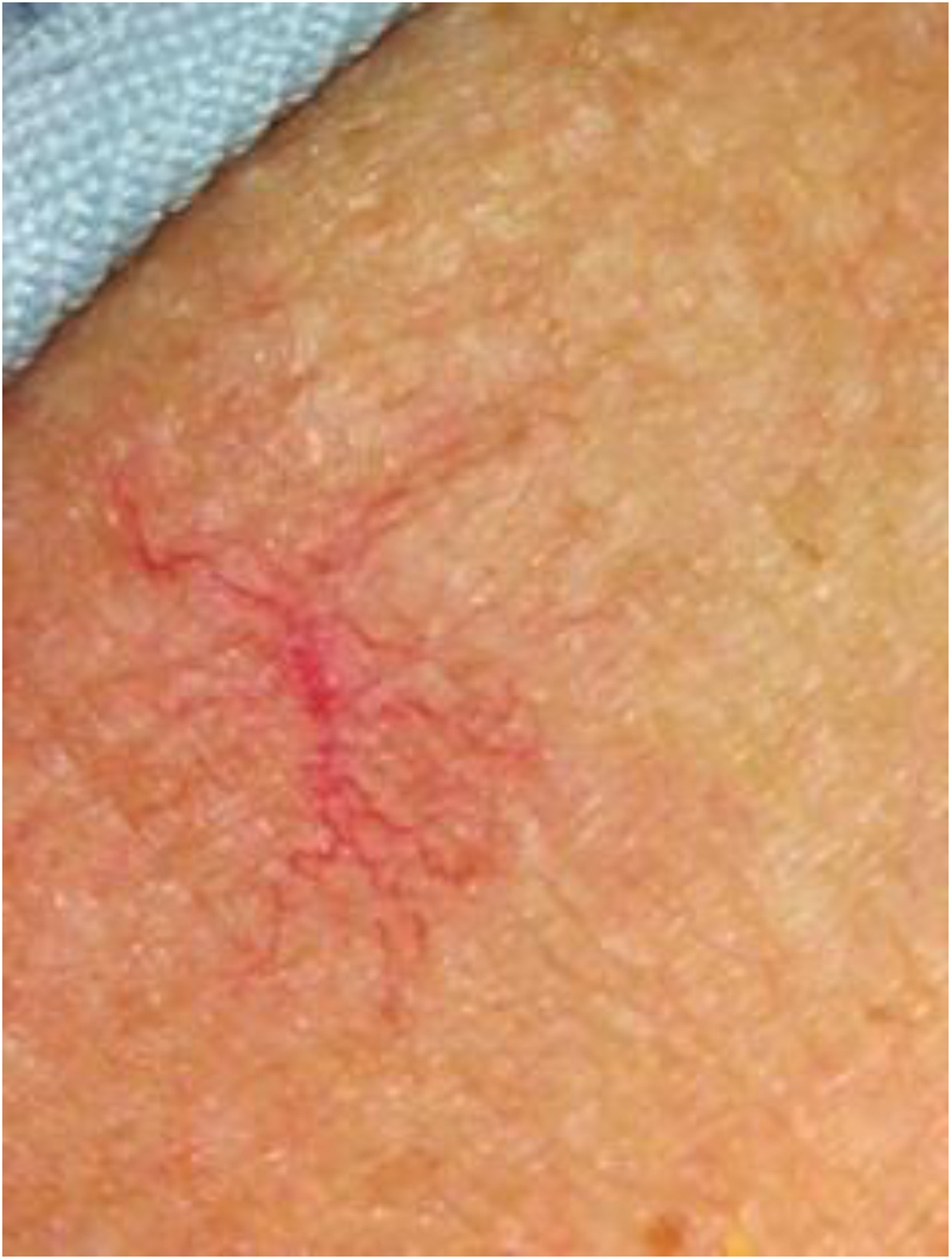
• Spider telangiectasia in the distribution of the superior vena cava.
• Bruising and purpura, gingival bleeding.
• Male patients: loss of body hair (axillary, pubic) and gynaecomastia.
• White nails (Terry nails) or parallel white bands (Muehrcke lines).
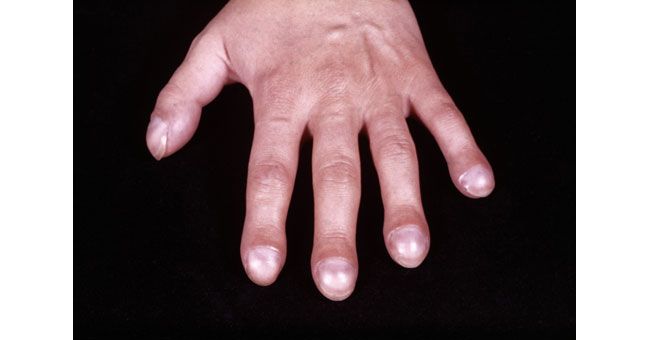
• Nail clubbing.
• Palmar erythema, erythematous tips to fingers.
• Peripheral oedema and ascites.
• Dilated superficial veins on the abdomen and chest if portal hypertension.
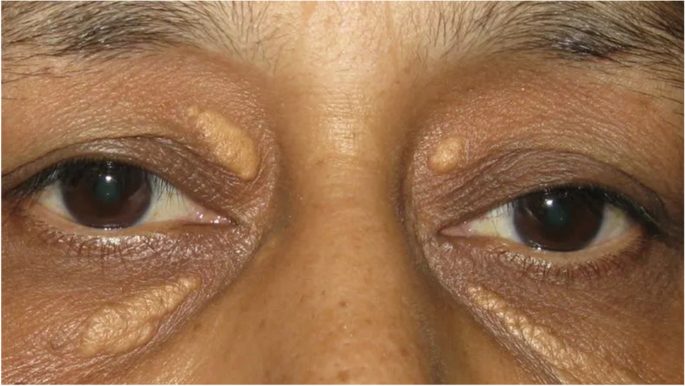
• Xanthomas in primary biliary cirrhosis and hyperlipidaemia.
• Limited cutaneous systemic sclerosis may be associated with primary biliary cirrhosis.
• Signs of porphyria cutanea tarda (photosensitivity, skin fragility, blisters) associated
with iron overload (haemochromatosis), alcoholic cirrhosis, and hepatitis C infection.
• Panniculitis in α-1 antitrypsin deficiency.